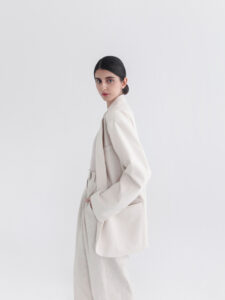
Many years ago I worked for a lovely woman in the beauty industry. (I learned from her that everyone in that industry has had “work” done. So much for “beauty in a jar”.) I commented that I found her wardrobe striking so she showed me her closet. Her entire wardrobe was white.
 And then, at my favorite local boutique there was a very chic French saleswoman who only wore black. She had pale skin and black hair. And as the years went by, she continued to dye her black hair jet black. I have no clue if she wore other colors elsewhere but after years of knowing her I doubt it.
Well, I am agnostic about those examples. If it works for them, it works.
But I think most of us crave some color variety. Color is the juice of life. In my own case, learning about and wearing my best colors changed my life and deepened my understanding of who I am.
And yes, our neutrals are colors too. Recognizing the best neutrals for your skin undertone and other color markers, and learning how to use them, is a smart part of creating and curating a flattering and wearable wardrobe. So let’s explore some fundamentals of wearing neutrals effectively.
We’ll look at the ones most people tend to think of first.
Can everyone wear black?
Summer’s “black”
Just as with white, there are a multitude of shades that we think of as black. In general, the greater the amount of contrast in your color markers – skin, eyes, and hair – the more extremely dark a black you can wear. This is why the Winter palette includes dark black.
If your markers are gentler, i.e., a very low level of contrast between the color of your skin, hair, eyes, your darkest shade of “black” might be a dark gray with some blue added.
For warmer skin tones in the Autumn range, their black might have some brown influence

Since Spring color types usually have both cool and warm colors in their palettes they often can wear black and it won’t pale them out. They generally have enough brightness and color in their skin that they won’t look overwhelmed or faded in black.
 Many people consider black to be a dramatic color. Maybe that’s because, at least in Western culture, we associate it with mystery and intensity. But for most people it’s a quiet color. That’s because it absorbs light. Any color that absorbs light automatically becomes somewhat subdued.
The exception to this is if the person has vey pale skin and jet black hair. That level of contrast creates a bit of Drama.
Which White is in Your Wardrobe?

Diane Keaton in ivory and clear white
White is pristine. It is about clarity, cleanliness, freshness. But in its own way it can also be austere. Think of the cloistered nuns who wear all white. For them, white signifies purity and divinity.

Winter
But just as with black, white has vastly different effects on different skin tones. On someone with very dark skin tones or extremely light ones, a clear bright white garment can make them appear strikingly “alive”. It will certainly make a strong statement. And yes, those are the Winter types.
Their white shades will be the clearer, crisp-looking ones. Anything too warmed up or grayed down will create unhealthy looking skin.

Spring
Since Spring types can usually wear both cool and warm colors, their whites could lean a tad warm, depending on some secondary influence from, for example, Autumn, but generally, their whites tend to remain clear. The feeling that gets conveyed is freshness rather than intensity.

Summer
Now, Summer types are also cool in skin tones and coloring, but unlike Winters, their skin will be more subtle and delicate. They whites have to be slightly grayed down or blueish to blend well with the subtlety of their overall soft and muted coloring.

Autumn
The warmer whites, those that have some yellow added, are the best ones for Autumn types. Their whites can even go into the light khaki range. Clear whites will emphasize any discoloration in their skin or make them look ashen.
Gray – Love it or Hate It
 From the feedback of my clients, this is the least loved and most misunderstood neutral. That could be because it is associated with very conservative fashion and professions. A banker wearing a dark gray suit doesn’t inspire wild or creative thinking (which may not be true).
But yes, it is a tricky color.

Winter gray
Winter types with pale skin tend to have striking color markers anyway, so it won’t wash them out or make them disappear. Those with darker skin do well in some of the lighter shades, especially if their hair has turned gray.

Spring tonal grays
Spring types, whose coloring often spans both cool and warm shades, can wear both lighter and darker shades. In fact, a tonal gray outfit can be a very sophisticated combination for a Spring. It would be great for suiting pieces and workwear.

A Summer blue gray

Very light blue gray for Summer
The one color type that can wear many, many grays is the Summer type. This is because most of the colors in their palette are already dusky and grayed down. They have a wide range of bluish grays as their neutrals and can wear them.
Autumns grays would have to be dark and warm – brownish gray. As gray is a combination of black and white, it just doesn’t fit easily into a palette where so many of the colors are combined with yellow.

Gray for an autumn/winter blend

Gray on an Autumn type
Tan, Camel, Khaki

Winter type in camel/khaki coat
Generally, most brown shades – and that includes the pale tans and khakis – will lean warm. So these are colors that typically work as neutrals for Spring and Autumn types. For Summer coloring, they just can’t go there. Brown, in general, isn’t harmonious with a Summer palette. And Winters need them to have some “punch”. So very dark or lighter shades of brown might work, depending on their secondary color influence.

Spring tan/camel
Now, I’ve seen a lot of articles that proclaim, “everyone can wear a Classic camel winter coat”. Er, no. I personally feel that this is the trickiest neutral to wear. Unless there is some Spring or Autumn in your color mix the more orange-y shades of camel can make you look a little sickly. And if your coloring does lean warm, the lighter ones can make you look dull.

Autumn brown
For Autumn, it would need to be in a deep, richer and redder brown. Spring color types can also look bright and upbeat in redder shades, both lighter camels and darker ones.
The Other Dark Neutrals
Your darkest shades of reds, blues, and greens are also considered among your neutrals. They are usually stronger in their impact and outward energetic expression than the whites and blacks in your palette. They can be very sophisticated and distinctive in their own right. But they are still neutrals and remain somewhat subdued.

Olive on an Autumn

Navy on a Spring

Burgundy on a Winter
These can be in the burgundy, navy, or olive range, depending on your level of warmth or coolness. The value of wearing these types of neutrals is that they can add richness to an outfit. They are more atypical than the colors we usually think of as neutrals and bring more creativity to a wardrobe.

Summer purple
For a Summer color type, something in their purple range might work as a neutral. But their many purples often have a more elegant energetic effect than a subdued one.
Skin tone color
And lastly, I have to mention a neutral that is the most controversial: your skin tone. Without going into detail, let me just quote my color mentor John Kitchener: “Why would you want to be walking flesh?”
If you want to dig deeper into your own color story check out my course: Choose Color First. There you’ll learn about the psychological impact of all different colors, how to determine your skin undertone and contrast level, how to organize your wardrobe, how to combine neutrals and colors with neutrals, and you’ll see dozens of images of outfit combinations for different color seasons. We’ve also just made that course available as a bundle with Discovering Your Inner Style for 25% off.
So, I’d love to know:
What’s your favorite neutral?
How do you wear it – what garments?
Do you add color, and if so, how?

Andrea’s books and new video series: